
The Viking Shieldwall: Ancient Tactics and Modern Teamwork Lessons
When stepping into battle, a Norse warrior’s greatest asset was not the sharpness of his blade, the reach of his spear, or the weight of his armor. It was the man standing directly to his left.
While popular films often portray Viking warfare as a chaotic free-for-all of individual berserkers charging wildly across the field, historical combat was immensely structured. Victory on the early medieval battlefield relied on discipline, mutual reliance, and a defensive formation known as the skjaldborg; the shieldwall.
Mechanics of the Skjaldborg
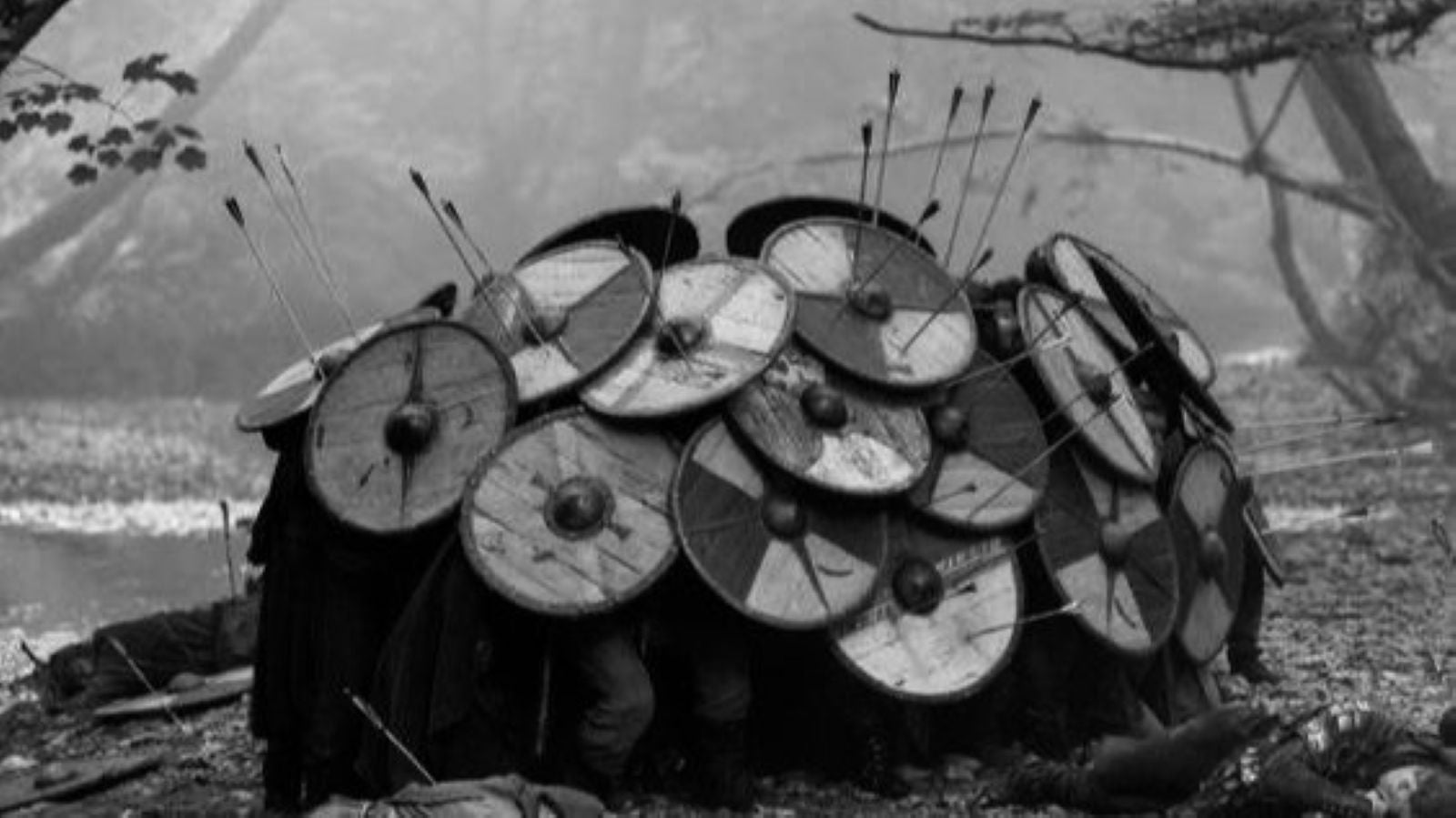
The Viking shieldwall was a dense, defensive infantry tactic designed to withstand heavy arrow volleys, spear thrusts, and massed enemy charges. Warriors stood shoulder-to-shoulder, overlapping their large, round wooden shields to form an unbroken wooden rampart.
The front rank overlapped their shields horizontally, often locking the rims together. The second rank placed their shields over the gaps between the front shields, while warriors further back held their shields overhead to protect the formation from falling arrows.
Behind this wall of wood, iron, and leather, fighters thrust long spears over or between the shields. Axes were used to hook down enemy shields, creating small openings for short swords and daggers to finish the job.
The Power of Interdependence
What made the shieldwall so formidable was its total reliance on individual accountability for collective survival.
A round Viking shield was typically three feet in diameter, held by a single central grip behind an iron boss. Held in the left hand, a shield was not meant merely to protect its owner; it was positioned to cover the exposed right side of the warrior standing to the left.
If a single man broke rank, stepped back in fear, or prioritized his own personal glory over the unit’s formation, a gap opened in the wall. Enemy spears would instantly penetrate the line, putting the entire warband at risk of being flanked and slaughtered. Personal survival depended entirely on protecting the person next to you.
Tactical Versatility and the Svinfylking
The shieldwall was not merely a static defensive wall; it was a flexible tool that could adapt to changing battlefield conditions.
When a commander needed to break an opponent's defensive line, the shieldwall evolved into an offensive wedge formation known as the svinfylking (swine-array). Warriors formed a sharp point at the front, driving deep into the enemy shieldwall with immense momentum, splitting the opposing line into two isolated groups that could be surrounded and defeated.
Communication within the shieldwall was critical. Locked behind wood and iron, with vision limited and noise deafening, warriors relied on rhythmic shouts, shield beats, and tight physical pressure to advance as a single organism.
Lessons in Modern Teamwork and Leadership
The principles that kept Viking warbands alive on battlefield sites like Stamford Bridge and Stiklestad offer timeless insights for modern teams, organizations, and leadership structures.
-
Mutual Accountability: Success requires trusting that every member will hold their position. When individual team members focus on protecting their peers rather than seeking personal credit, the collective defense becomes impenetrable.
-
Disciplined Structure: Creativity and initiative thrive best within a stable structure. Without a solid foundation, individual effort leads to fragmented, wasted energy.
-
Collective Resilience: Under extreme pressure, isolating yourself leads to defeat. Standing shoulder-to-shoulder, sharing the burden, and maintaining line communication allows a group to absorb heavy shocks and adapt to shifting environments.
The legacy of the skjaldborg proves that true strength lies not in isolated power, but in unity, trust, and unwavering solidarity.