
The Icelandic Magical Staves: Vegvísir and Ægishjálmr Explained
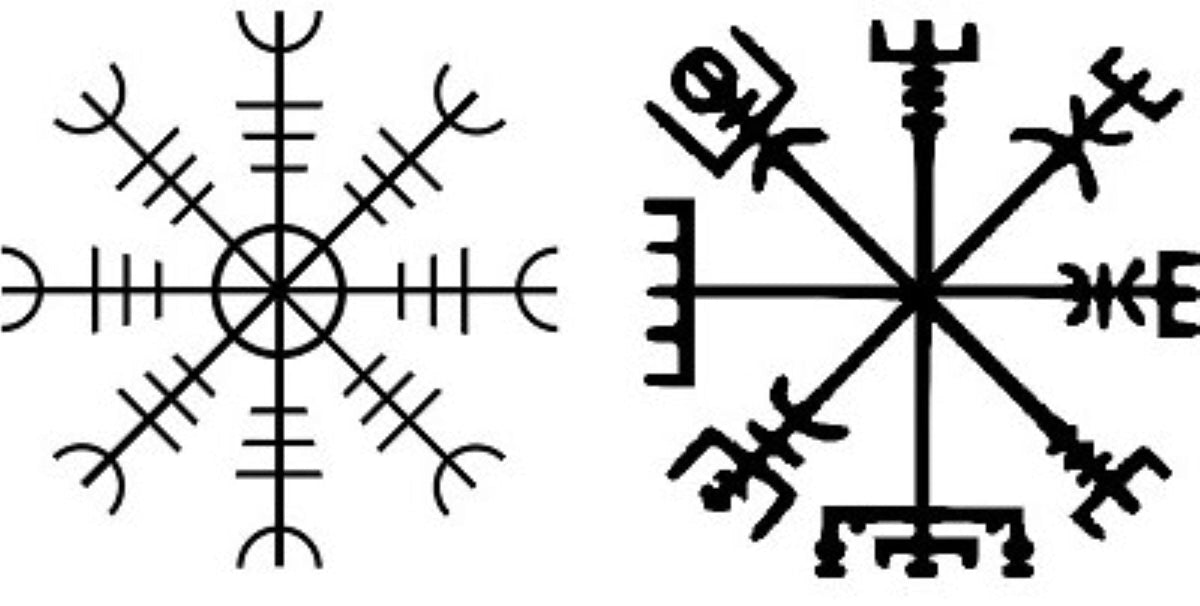
Among all the symbols associated with Northern heritage today, few capture the imagination quite like the intricate, star-like geometric designs known as Icelandic magical staves (galdrastafir). Etched onto leather, carved into wood, and worn as modern jewelry or tattoos, two symbols dominate the popular space: the Vegvísir (often called the Viking Compass) and Ægishjálmr (the Helm of Awe).
While these symbols are frequently labeled as ancient Viking runes painted on longships or shieldwalls, their true history is far more nuanced, fascinating, and deeply rooted in the folklore of post-medieval Iceland.
The True Origins: Grimoires of Early Modern Iceland
To understand these symbols, one must look closely at their historical timeline. The Viking Age ended in the 11th century, yet the earliest surviving written records containing the Vegvísir and Ægishjálmr appear centuries later in early modern Icelandic manuscript collections known as galdrabækur (grimoires).
Formally cataloged in manuscripts like the Huld Manuscript (compiled by Geir Vigfússon in 1860) and the 17th-century Galdrabók, these staves represent a unique blending of traditional Scandinavian rune lore, folk magic, medieval European alchemy, and Christian mysticism. Rather than tribal war banners of 9th-century raiders, they were solitary folk spells created by Icelandic practitioners navigating a harsh, isolated landscape.
Vegvísir: The Wayfinder
The name Vegvísir translates directly from Old Norse as "wayfinder" or "sign post" (vegur meaning way, and vísir meaning pointer). It features eight spoke-like arms extending from a central point, with each arm carrying distinct rune-like terminals, rings, and crossbars.
According to the famous passage in the Huld Manuscript, the purpose of the Vegvísir is purely protective against disorientation and physical peril:
"If this sign is carried, one will never lose one's way in storms or bad weather, even when the way is not known."
For early modern Icelanders, losing one's way during a sudden blizzard or mountain fog often meant freezing to death. The Vegvísir was not designed to navigate a ship to foreign raiding shores, but rather as a personal talisman to guide travelers safely back home through blinding arctic weather and dangerous mountain passes.
Ægishjálmr: The Helm of Awe
Unlike the Vegvísir, Ægishjálmr (the Helm of Awe or Helm of Terror) possesses older roots that stretch back into early saga literature. The symbol itself consists of eight trident-like arms pointing outward from a central hub, radiating an aura of absolute defense and psychological dominance.
The term Ægishjálmr appears in the legendary Völsunga saga, where the dragon Fafnir wears the Helm of Awe to strike fear into the hearts of all who approach him. In the practical folk magic of later centuries, the symbol was drawn or pressed onto the forehead, often between the eyes, using lead, copper, or saliva.
In the Galdrabók, the stave's purpose is defined as both protective and assertive:
"It is to be made in lead, and when a man expects to meet his enemies, he should press it on his forehead between his eyes, and you will conquer him."
The Helm of Awe served to paralyze opponents with fear, ward off unjust legal persecution, and shield the user from harmful energies, allowing them to prevail in high-stakes confrontations.
Decoding the Structure of a Stave
The construction of these staves follows a systematic methodology of early northern folk magic. The word stave (stafr) refers to a wooden stick or written character.
To create a stave, practitioners combined multiple individual runes, bindrunes, and symbolic modifiers onto a central cross or wheel matrix. The eight radiating spokes mirror the cardinal and intercardinal directions, grounding the magic within the physical realm. By overlapping symbols for protection, strength, sight, and victory onto a single focal point, the creator concentrated the spell's intent into a single visual emblem.
An Enduring Legacy of Northern Resilience
While modern pop culture often misattributes these magical staves directly to 9th-century longships, discovering their true origin does not diminish their power or significance.
The Vegvísir and Ægishjálmr represent the enduring resilience and imaginative spirit of the Icelandic people; a culture that preserved its ancient runic heritage through changing centuries, adapting it to survive in one of the most unforgiving environments on earth. Whether worn for internal guidance or psychological strength, these ancient staves continue to serve as timeless symbols of orientation, protection, and purpose.