
Old Norse Law: How the "Thing" and the Jury System Governed the North
When we think of how the Vikings maintained order, we usually imagine blood feuds, duel to the death, and the rule of the strongest. While violence was a reality of the era, the fabric of Norse society was actually held together by a sophisticated, democratic legal system. The Vikings were deeply invested in the rule of law, creating a structured society where disputes were settled not by the sword, but by public debate, community consensus, and an early form of the jury system.
The Assembly of Free Men
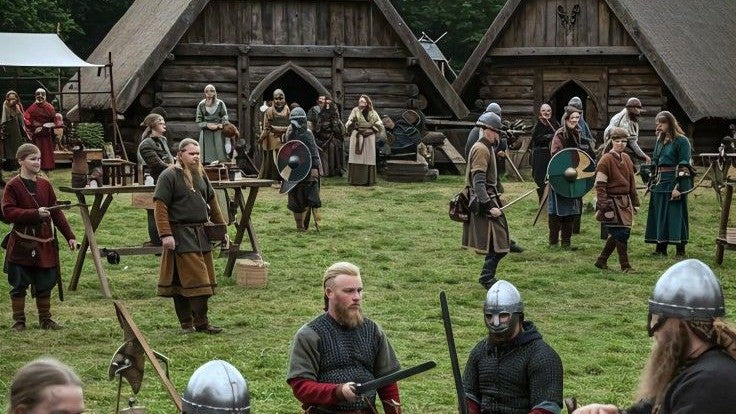
At the heart of the Norse legal structure was the "Thing," or "Þing" in Old Norse. The Thing was a local or regional assembly where free citizens gathered to settle disputes, elect leaders, pass new laws, and judge criminals. These assemblies were held at regular intervals at specific, open-air sites, usually marked by natural landmarks like large stones or hills. Attendance was not just a right; it was a civic duty for every free landowner. At a time when much of Europe was ruled by absolute monarchs and feudal lords, the Vikings practiced a remarkable system of collective governance where even the poorest free farmer had a voice.
The Lawspeaker and Oral Tradition
Because the Vikings lived in a largely oral culture during the height of the Viking Age, laws were not written down in heavy books. Instead, society relied on a highly respected official known as the Lawspeaker. It was the duty of the Lawspeaker to memorize the entire legal code of the region. At the opening of the annual assembly, the Lawspeaker would stand before the crowd and recite one-third of the law from memory. This ensured that the public remained educated on their rights and responsibilities, and it prevented leaders from secretly altering the rules to favor themselves.
The Original Jury System
One of the most profound legacies of Old Norse law is the development of the jury. Centuries before the system became a staple of modern Western courts, the Vikings utilized a panel of local citizens to determine guilt or innocence. In Iceland’s early legal system, for example, a panel of thirty-six neighbors; known as the "búa-kviðr", was appointed to hear a case. These jurors were chosen because they lived close to the incident and were likely to know the facts or the character of the individuals involved. Their job was not just to interpret the law, but to provide a truthful verdict based on community standards.
Outlawry: The Ultimate Punishment
Norse law rarely utilized prisons, as maintaining them was impractical for an expansionist society. Instead, punishments were tailored to restitution or social banishment. For lesser crimes, a guilty party was forced to pay a heavy fine to the victim or their family. For the most severe offenses, such as cold-blooded murder or oath-breaking, the punishment was outlawry. An outlaw lost all legal protections. They were banished into the wilderness, their property was confiscated, and anyone was permitted to kill them without fear of legal consequence. For a Viking, being cut off from the warmth and protection of the clan was a fate worse than death.
A Society Built on Fairness
The complex legal system of the Vikings proves that they valued cooperation and fairness just as much as physical strength. They understood that a community could only survive the harsh northern climate if its members respected a shared code of conduct. The legacy of the Thing lives on today in modern parliaments across Scandinavia, such as the Icelandic Althing, which stands as the oldest surviving parliament in the world. It reminds us that true power lies not in the ability to destroy, but in the wisdom to build a community grounded in justice and honor.