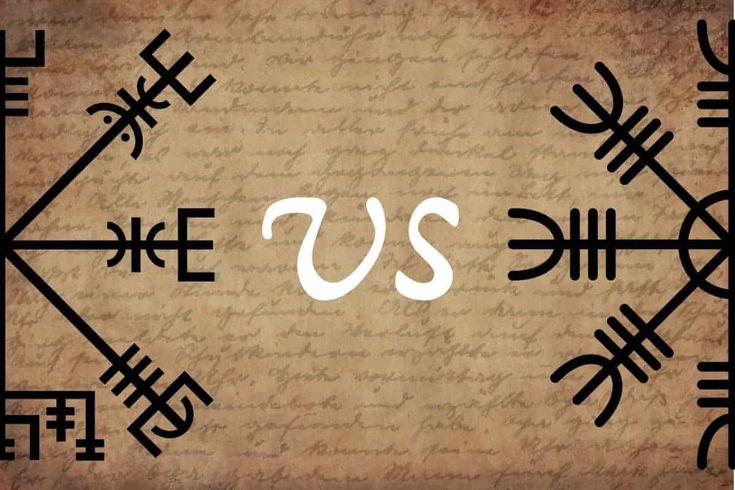
Aegishjalmur vs. Vegvisir: The Truth Behind the "Viking Compass"
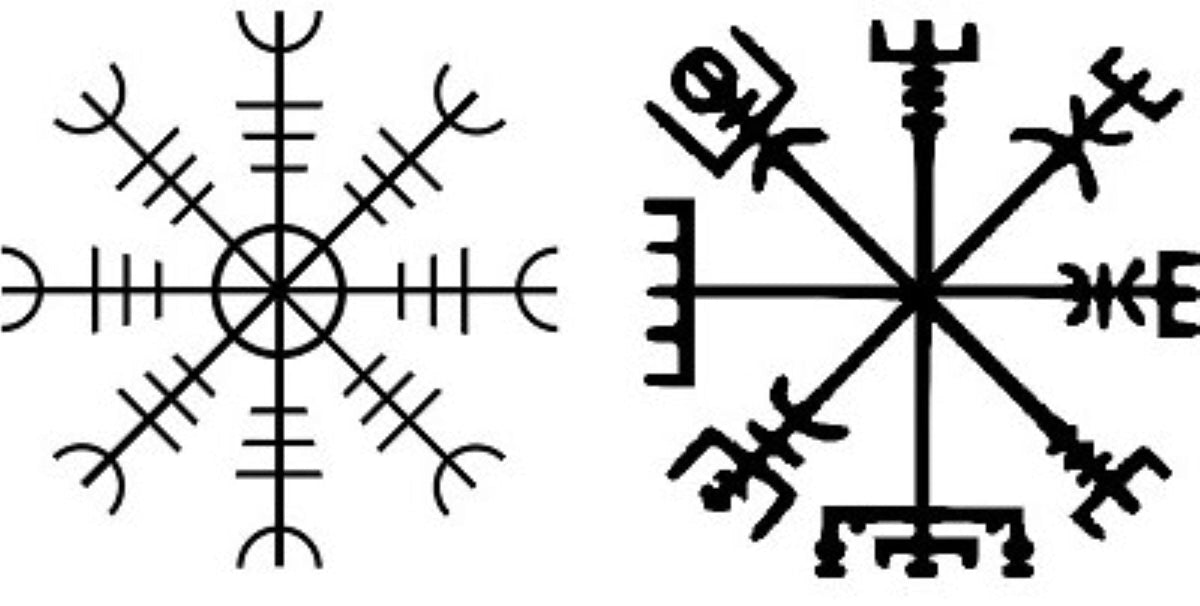
In the misty history of the North, two symbols stand out as the ultimate marks of the Norse spirit: the Aegishjalmur (the Helm of Awe) and the Vegvisir (the Wayfinder). You see them on shields in movies, on the skin of modern warriors, and hanging from the necks of those who find solace in ancient ways.
But if you were to travel back to the year 900 AD and show a Viking these symbols, would they recognize them? The answer is a fascinating journey through time, magic, and the evolution of legend.
The Legend of the Dragon’s Helm: Aegishjalmur
The story of the Aegishjalmur begins not as a drawing, but as a physical object of terror. In the Völsunga Saga, the dragon Fafnir wore the "Helm of Awe" between his eyes to strike paralyzing fear into any who dared approach his gold hoard. When the hero Sigurd slew the dragon, he took the helm for himself, claiming its power of invincibility.
Historically, the word "Aegishjalmur" appears in the Poetic Edda, yet the specific eight-armed symbol we recognize today didn't appear in manuscripts until the 1600s. In these later Icelandic "grimoires" (books of magic), the instructions were visceral: a person should press the symbol into lead and then press it against their forehead, or carve it into the space between their eyebrows. It was a psychological weapon designed to make the wearer "awe-inspiring" and to crush the will of their enemies.
The Mystery of the Wayfinder: Vegvisir
The Vegvisir, often called the "Viking Compass," is perhaps the most beloved symbol in the niche today. Its purpose is poetic and profound: "If this sign is carried, one will never lose one's way in storms or bad weather, even when the way is not known."
However, despite its "Viking" nickname, the Vegvisir is a much younger soul. The earliest record of this symbol comes from the Huld Manuscript, compiled in Iceland in 1860; nearly 800 years after the Viking Age ended. While it was born from the same rugged Icelandic soil as the sagas, it represents a later era of folk magic. It wasn't used to navigate longships across the Atlantic, but rather to help the soul navigate the "storms" of life.
Two Paths: Protection vs. Guidance
While they look similar, both being "stave" symbols with radiating arms, their historical intentions are opposites:
-
Aegishjalmur (The Helm of Awe): This is a symbol of Offense and Defense. It is the roar of the dragon, meant to protect the wearer by overwhelming the opponent. It is a mark for the warrior and the protector.
-
Vegvisir (The Wayfinder): This is a symbol of Guidance and Faith. It is the steady hand in the dark, meant to ensure that no matter how lost you feel, you will always return home. It is a mark for the traveler and the seeker.
Why the History Matters Today
Why do we still call them "Viking" symbols if they appeared later? Because the spirit behind them is undeniably Norse. The people who recorded these symbols in the 17th and 19th centuries were the descendants of the Vikings. They lived in the same harsh landscapes, spoke a language that had barely changed, and still looked to the old sagas for strength.
Today, choosing between these two is a reflection of your own journey. Are you in a season where you need the fierce protection of the Helm of Awe to stand your ground? Or are you at a crossroads, needing the Wayfinder to lead you toward your true North?
Both symbols carry the weight of Icelandic history and the magic of a culture that refused to be forgotten. When you wear them, you aren't just wearing a design, you are carrying a tradition of resilience that has survived for a thousand years.